
Mount Kilimanjaro Tanzania, Tanzania Mountain Hiking Tour
Mountain Kilimanjaro is the prominent feature of the Kilimanjaro Geopark. Kilimanjaro is the highest mountain in Africa, a majestically freestanding peak located in Tanzania in East Africa. This mountain is Africa’s highest mountain at 5,896 metres above sea level. Kilimanjaro is home to three main volcanic peaks: Kibo, Mawenzi, and Shira. It has the most remarkable sights one can admire in a Tanzania Safari, especially for hikers. This iconic mountain is a bucket list destination for many adventure seekers. Kilimanjaro offers a once-in-a-lifetime opportunity to conquer the highest point on the African continent while taking in breathtaking sights and experiencing diverse ecosystems, including lush rainforests.
Kilimanjaro’s peaks are renowned across the globe, with each summit offering a unique experience. For embarking on a Tanzania safari, summiting Uhuru Peak makes a perfect addition to the adventure, especially when combined with a visit to nearby wildlife parks like Serengeti National Park or Ngorongoro Crater. It’s also commonly added as an adventure extension to a safari in a nearby country, such as Uganda and Rwanda. This applies to those only interested in a more relaxed and wildlife-focused adventure. Uganda gorilla trekking or Rwanda safari experiences are the only way to explore the unique biodiversity of these countries.
Despite being located near the equator, where temperatures are high, and snowfall is not typical, the mountain has a large expanse of ice glaciers and attracts many visitors from all over the world.
All you need to know about Mountain Kilimanjaro in Tanzania
Mountain Kilimanjaro is an essential water coverage area for both Tanzania and Kenya. High rainfall and extensive forest belts give it a high coverage value counting for about 96 percent of the flowing water from the mountain. The southern and south-eastern forested slopes form the main upper drainage basin of the Pangani River, one of Tanzania’s largest rivers, which drains into the Indian Ocean near Tanga. Its course provides water to the hydro power plants of the Nyumba ya Mungu and Pangani falls, which generate some of Tanzania’s electricity output.
The river also contributes to the water supply for large-scale farming for the lower Moshi rice irrigation scheme. The southern slopes also provide water to the Arusha Chini sugarcane plantation. The northern –eastern slopes from the basin of the Tsavo River, a tributary of the Galana River, one of Kenya’s major rivers.
Other attractions within the aspiring geopark include Lake Chala. It’s a main crater of the mountain, parasitic cones and other geological heritages such as the zebra rocks, as well as several waterfalls, historical sites, and cultural value, including Chagga traditional vessels and boltholes, which are used as a means of defence against other tribes, especially the Maasai.
Lake Chala Crater
The lake is located inside the elevated crater rim at the foot of Kilimanjaro. Chala Crater Lake is one of the mountain’s biggest lakes. Visitors on a Tanzania safari tour are mesmerised by the magnificent scenery of Crater Lake. This lake is 1.6 meter squared, and is also well known among safari tourists due to its excellent waters.
Bird Watching In Mount Kilimanjaro National Park
As a visitor embarks on Africa’s tallest mountain, be ready to hear the sounds of various forest birds that can be heard throughout the park. Birders should make mountain Kilimanjaro their one-stop shop because it is among the best places for a bird watching safari in Tanzania, with over 750 bird species documented at the mountain.
The best birders gain from climbing mountain Kilimanjaro because it’s a two-way safari tour experience. Alongside hiking mountain Kilimanjaro, they like going birdwatching. Kilimanjaro National Park is home to native bird species that are rare on Earth. The park is home to numerous African bird species that are found in typical rainforests. These bird species include turacos, which are in several species such as Schalow’s, Hartlaub’s, violet-crested, rose, and many more commonly sighted birds. There are 30 different species of cuckoos, which include the emerald, klaas, lark-heeled, and white-brown cuckoos, in addition to the narina trogon, silvery-cheeked hornbill, and trumpeter hornbills. African pygmy kingfishers, malachite kingfishers, and other kingfishers, bee-eaters, and African pitta are a few examples, though. Travelling over scenic, African, and forested routes, which allow longer days to reach the summit, allowing birders to enjoy more birding. Whenever they stop for a break and also get to go birdwatching around the camping areas
Hiking Routes at Mountain Kilimanjaro
Depending on the visitors’ fitness who can choose from the six walking paths to climb mountain Kilimanjaro. Kilimanjaro has an area [Machame route] and these Rongai, Shira, Lemosho, Marangu, and Umbwe trails, among the several trekking routes. The hiking takes 6-8 days, depending on the visitors’ physique and desire. With help from the experienced rangers and potters, to make sure that the visitor reaches the summit and returns safely.
Game Viewing
Mountain Kilimanjaro National Park is a habitat for 30 different types of Tanzania wildlife safari species, which are in different vegetation zones and resident populations. Game viewing is the most enjoyed Tanzania safari experience on mountain Kilimanjaro. The park hosts a great number of diverse wildlife, including forest elephants, hyenas, dik dik, duikers, bushbucks, and bush babies.
Kibo Peak
Kibo Peak is the central and largest among the three main peaks of mountain Kilimanjaro, and it holds a historical importance. Unlike the jagged ridgelines of Mawenzi Peak, Kibo Peak is characterised by its balanced shape, making it the focus of many trekkers aiming to reach Uhuru Peak. The dormant volcanic nature of Kibo makes it an exciting challenge for those seeking to experience a Kilimanjaro trek and uncover the mysteries of this ancient volcano.
This trek provides an opportunity to witness the rugged and desolate beauty of the high-altitude environment. Climbers usually ascend to Kibo passing through barren landscapes filled with volcanic rocks. For visitors interested in experiencing Africa’s wildlife, Kibo Peak is the best gateway to Tanzania’s wildlife parks. A traveller can combine the mountain adventure with the safari in Tanzania, making it a perfect combination and complement to gorilla trekking in Uganda or Rwanda safari, depending on the visitors’ preferences. This combination creates a remarkable enclosure for balancing trekking and renowned wildlife.
Mawenzi peak
This peak stands at 5,149meters. Mawenzi Peak is the second-highest peak on Mount Kilimanjaro and offers a much more challenging, technical climb than the Uhuru and Kibo peaks. Mawenzi has rugged and craggy terrain are often more suited for advanced mountaineers as the ascent requires both skill and experience.
Mawenzi Peak is often less reached than the other two peaks, as most climbers focus on Kibo Peak or aim for Uhuru Peak. However, for those seeking more private off-the-beaten-path adventure climbing, Mawenzi provides an unparalleled sense of ruggedness and isolation. The peak offers a remarkable view of Mount Kilimanjaro’s crater and the vast Tanzanian landscape.
Choose Kilimanjaro to trek for safari.
Climbing mountain Kilimanjaro adds an entirely new destination to your African safari experience. For travellers who want to challenge themselves and experience something beyond the safari activities, Kilimanjaro trekking is the perfect choice. It’s one of the unforgettable adventures, taking you from rainforests to glaciers, and allowing you to experience Africa’s landscapes from a unique perspective. When this trek is compared with a budget gorilla trekking safari or even a private gorilla trekking safari. It becomes a truly comprehensive African adventure.
How to combine Kilimanjaro trekking with gorilla trekking in Africa
For those embarking on a Uganda safari or Rwanda safari tours, combining a gorilla trekking adventure with a fantasy of climbing Mount Kilimanjaro is an excellent way to experience East Africa’s natural wonders. To visitors wanting to enhance their Kilimanjaro climb after reaching the summit of Uhuru Peak. Why not expand your safari to immerse yourself in the world of gorilla trekking in Rwanda? The adventure allows visitors to have insights into mountain gorillas in Volcanoes National Park, one of the most significant biodiversity hotspots in the world.
Comparably, if your journey is to take you to Uganda, you enjoy the rich cultural experience in Kampala, followed by an exciting gorilla trek in Bwindi Impenetrable Forest National Park. This combination of Kilimanjaro trekking with Uganda gorilla trekking offers a diverse experience that blends the rugged beauty of Africa’s highest peak with the unparalleled opportunity to observe gorillas in their habitats.
How to combine the Kilimanjaro trek with Uganda or Rwanda safaris
While planning your Uganda safaris or Rwanda tours, the possibility of combining them with a mountain Kilimanjaro trek can be an extraordinary way to experience both the natural beauty and the adventure of East Africa. Even if you decide to start a trip with a Kilimanjaro trek and end with a gorilla trek, or the other way around. This combination offers an exciting safari experience. You can even consider flying between Tanzania, Uganda, and Rwanda. Therefore, maximise your adventure time and cover more landscapes.
Popular Tanzania Wildlife Safaris Arranged by Acacia Safaris
8 Day Tanzania Wildlife Safari; The 8 Day Tanzania Wildlife Safari will make you to explore The comfortable weather and unparalleled scenic beauty with roads that run through it, littered with campgrounds and lodges, excellent year-round wildlife viewing; flocks of flamingos, silent families of giraffes, noisy packs of wild dogs, lions with no trouble finding lunch; zebras roaming around waiting for sunset. Read More…
11 Day Tanzania Wildlife Tour; The 11 Day Tanzania Wildlife Tour, With your naturalist guide, leave for Tarangire National Park, Tanzania’s third largest National Park and sanctuary to an unusually large elephant population. Majestic baobab trees are an interesting feature of the park that dwarf the animals that feed beneath them. Animals converge along the Tarangire River, Read More…
12 Day Tanzania Cultural & Nature Walk; The 12 Day Tanzania Cultural & Nature Walk Tour, With your naturalist guide, leave for Tarangire National Park, Tanzania’s third largest National Park and sanctuary for an unusually large elephant population. Majestic baobab trees are an interesting feature of the park that dwarf the animals that feed beneath them. Animals converge along the Tarangire River, which provides the only everlasting water supply. Read More…
18 Day Kilimanjaro Hiking Tour Tanzania Zanzibar Adventure safari; The 18 Day Kilimanjaro Hiking Tour Tanzania Zanzibar Adventure safari will make you explore the Best of Tanzania safari includes all of the major highlights of Tanzania – from climbing Mt. Kilimanjaro to a Lodge Safari in the Ngorongoro Crater, Serengeti and Lake Manyara. From here you proceed to relaxing on the white sandy Indian Ocean beaches of Zanzibar. You will not regret your Safari. Read More…
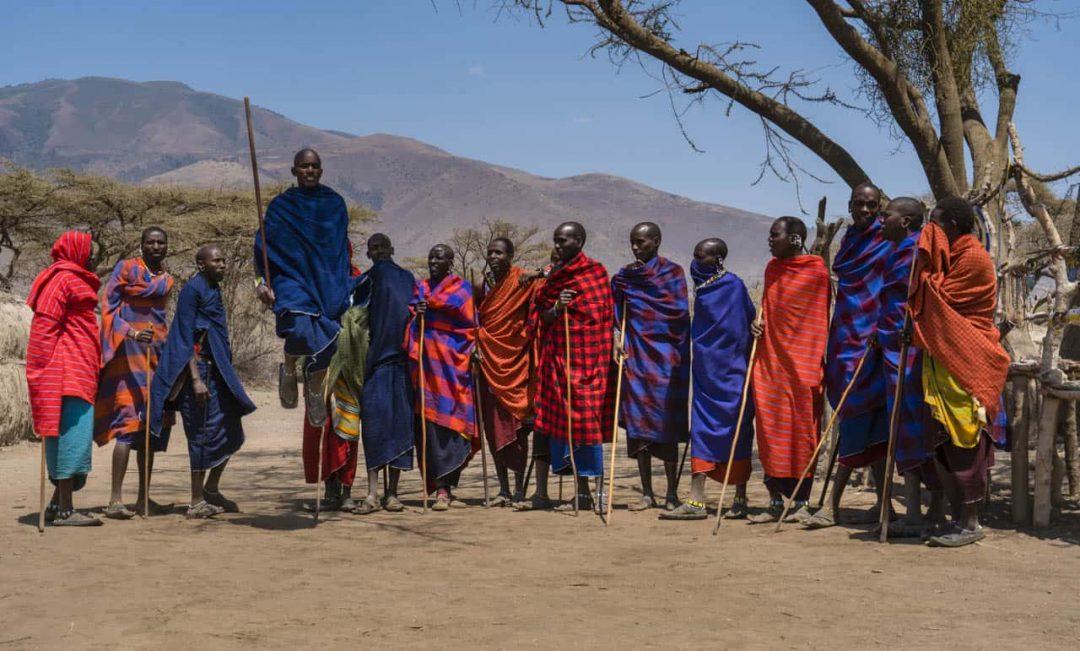
Maasai people
Most Visited Tanzania Safari Tour Destinations / Where to go for a Tanzania Wildlife Safari
With about 30% of the territory under protection, Tanzania counts 13 national parks, 16 wildlife reserves, the Ngorongoro Conservation Area, marines parks and protected areas. The Northern Circuit is the most popular for game safaris and includes Serengeti, Ngorongoro, Tarangire, Lake Manyara, Mt. Kilimanjaro.
Thousands upon thousands of wildebeest that march in mindless unison on the annual migration through the Serengeti, perhaps? Or a family of elephants wading across the wide, muddy Rufiji/Tarangire River? What about a pride of well-fed lions sunbathing on the grassy floor of the majestic Ngorongoro Crater? Certainly, it is such images that tend to spring to mind when one thinks of Tanzania. And properly so!
Tanzania, truly, is a safari destination without peer. The statistics speak for themselves: an unparalleled one-quarter of its surface area has been set aside for conservation purposes, with the world-renowned Serengeti National Park and incomprehensibly vast Selous Game Reserve heading a rich mosaic of protected areas that collectively harbor an estimated 20 percent of Africa’s large mammal population.
SERENGETI NATIONAL PARK TANZANIA; Serengeti National Park with 14,763 sq km is the largest Tanzanian park, contiguous with Kenyan Masai Mara and extending almost to Lake Victoria. Read More…
LAKE MANYARA NATIONAL PARK TANZANIA; Lake Manyara National park is one of the most popular Tanzanian parks along the Northern circuit. It is located on the ridge of the Rift Valley, with the escarpment in the western border of the park. Read More…
TARANGIRE NATIONAL PARK TANZANIA; Tarangire National Park is located along the Tarangire river, to the south of Lake Manyara. During the dry season, from August to October,Tarangire has one of the highest concentration of wildlife than any other African national park. Read More…
NGORONGORO CRATER CONSERVATION AREA; The area is located between the Serengeti and Lake Manyara. The area covers about 8.300 kms including Olduvai Gorge, Lake Ndutu and Masek and a series of volcanoes most of which are inactive. Read More…
MOUNT KILIMANJARO TANZANIA; Kilimanjaro is a giant volcano reaching an elevation of 5,895 m with Uhuru Peak. Other names for this volcano are: Kilima Dscharo, Oldoinyo Oibor (white mountain in Masai) and Kilima Njaro meaning shining mountain in Swahili. Read More…
RUBONDO ISLANDS; Visit the Rubondo Island National Park for nature walking, relaxing, fishing, boat Excursions, Bird Watching, name it. Tanzania’s tenth National Park and the only one in Lake Victoria, Rubondo Island is located in the southwest of Lake Victoria on a 240 sq. km island. Read More…
Most Popular Kenya Wildlife Safari Ideas / Kenya Safaris Tour Options
- 3 days Samburu Safari Kenya Wildlife Tour
- 6 days Maasai Mara Kenya Wildlife Safari
- 6 Days Kenya Wildlife Safari
- 7 Days African Big Five Safari Kenya Wildlife Tour
- 7 Days Kenya Wildlife Safari
- 7 Days African Big Five Safari Kenya Wildlife Tour
- 8 Day Magnificent Kenya Tours
- 8 Days Kenya Wildlife Safari / Wildebeest Migration in Kenya
- 8 Days Kenya Wildlife Safaris Tour
- 9 Day Kenya Elegant Wildlife Safari / Kenya Wildlife Safaris Tour
- 11 Days Kenya Wildlife Safari / Wildlife Safaris in Kenya
- 12 Days Kenya Wildlife Safari Tanzania Wildlife Tour
Kenya Safari Destinations / Where to go for Wildlife Safaris in Kenya?
Maasai Mara National Reserve: Masai Mara is the most famous and most visited reserve in Kenya. Since it is protected as a reserve and not as a national park, Masai Mara is not managed by Kenya Wildlife Service but by the local authorities, namely District Councils. The protection of this area, among other factors, favoured re-population of the territory by the Maasai tribes, who by virtue of the reserve status were put in charge of the reserve’s management through the District Councils. Read More…
Amboseli National Reserve Kenya: Amboseli lies immediately North West of Mt. Kilimanjaro, on the border with Tanzania. Amboseli was established as a reserve in 1968 and gazetted as a National Park in 1974. The Park covers 392 kms and forms part of the much larger 3,000 Kms Amboseli ecosystem. Large concentrations of wildlife occur here in the dry season, making Amboseli a popular tourist destination. Read More…
Samburu National Reserve Kenya: Samburu, Buffalo Springs and Shaba are the most remote and inaccessible among the popular reserves located in Northern Kenya along the banks of the Ewaso Ngiro river. Shaba, the less visited of the three, is also the largest, with a total extension of 239 km. Samburu and Buffalo Springs are similar in surface area, 165 km and 128 km respectively. The area has been traditionally inhabited by the Samburu people, a nomad paranilotic tribe closely related to the Maasai. Read More…
Lake Nakuru National Park: Lake Nakuru is a very strong alkaline lake 62 kms in extent. Since its gazetting in 1968 as a national park, both authorities and conservation organisations have kept on winning the battle to private property and human settlings, further broadening the park limits in 1968 and 1974 to its current extension of 188 kms. The park is easily accessible, since Nakuru is the fourth city in the country and the headtown of the Rift Valley. The park covers the lake and a land strip around the northern, Read More…
Aberdare National Park: Created in 1950, Aberdare National Park is located in the Central Highlands. The landscape is made by the moorland, peaks and forest of the Kinangop Plateau in the South and the Salient rain forest in the East. Read More…
Mount Kenya National Park: Mt. Kenya is an imposing extinct volcano dominating the landscape of the Kenyan Central Highlands, east of the Rift. Mt. Kenya lies about 140 km North, North-East of Nairobi with its Northern flanks across the Equator. Read More…
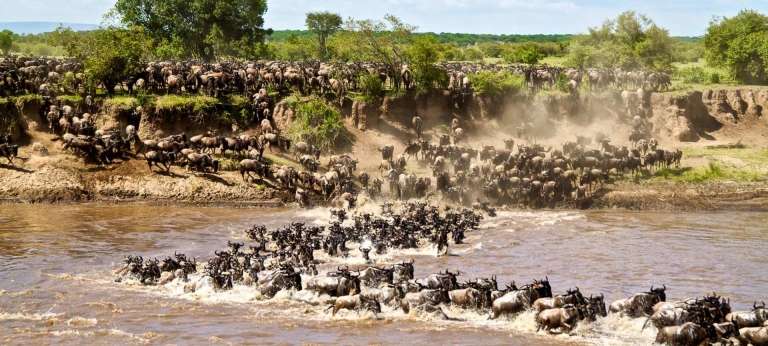
wildebeests migration
Kenya Safari Attractions / What to See on A Kenya Wildlife Safari?
ABERDARE RANGES; The ranges are 343 kms from Nairobi and are at an altitude of 2500-4000 ft occupying an area of 104 sq. kms. The Aberdare National Park is part of the Aberdare Mountain Range. Deep valleys, streams and rivers as well as cascading waterfalls feature in this region. Read More…
BIG FIVE; Amboseli National Park is one of Kenya’s most prevalent parks on account of the astonishing view it exhibits of nearby Mount Kilimanjaro, the world’s highest freestanding mountain. If you travel to Amboseli National Park, be sure of finding flocks of elephants with the unforgettable views of Kilimanjaro. Read More…
KENYA BEACH HOLIDAYS; This is usually the last part of your safari around Kenya. After spending time in the bush on safari, take a few days to relax on the beaches and catch a tan before heading home. Read More…
MOUNT KENYA; The region affords an excellent game viewing. Examples include the black and white Colobus and Sykes bushbuck, elephant, monkeys, buffalo, black rhino, waterbuck, genet cat and the bongo, Read More…
MOUNTAIN MERU; A commonly accepted area as the setting where Elsa, Joy Adamson’s lioness, was returned to the wild (Born Free 1960 – Written by Joy Adamson). Meru provides an astonishing combination of incomparable habitats. On the lower slopes of Mt. Kenya, Read More…
NAIROBI CITY; This is a great vacation site where you can get your films developed, wander through bookshops and send off your postcards. This Safari vacation in Nairobi is almost inevitable. Stay in Nairobi, you’ll find a town full of hustle and bustle, Read More…
WILDLIFE AND SCENERY; This is where the refreshing waters of the Ewaso Ngiro River run through Samburu and draw towards plenty of wildlife – including lions, giraffes elephants and zebras. Leopards are also regularly spotted. Read More…
THE GREAT RIFT VALLEY; Visit one of the wonders of the world on a Great Rift Valley tour. The valley forms a wide trench (about 5400 miles long) down the length of Africa that is visible from the moon. When planning to have a vacation at the Great Rift Valley in Kenya, Read More…
TREKKING SAFARIS; Maralal National Reserve is one of Kenya’s little-known treasures. Tucked away in the center of the country amidst the Ol Doinyo Lenkiyo Mountains. Maralal completely surrounds the Samburu town of the Maralal within the Reserve’s boundaries. It is one of the best places for trekking safaris, Camel safaris, and walking safaris. Read More…
[captainform id=”1286473″]